
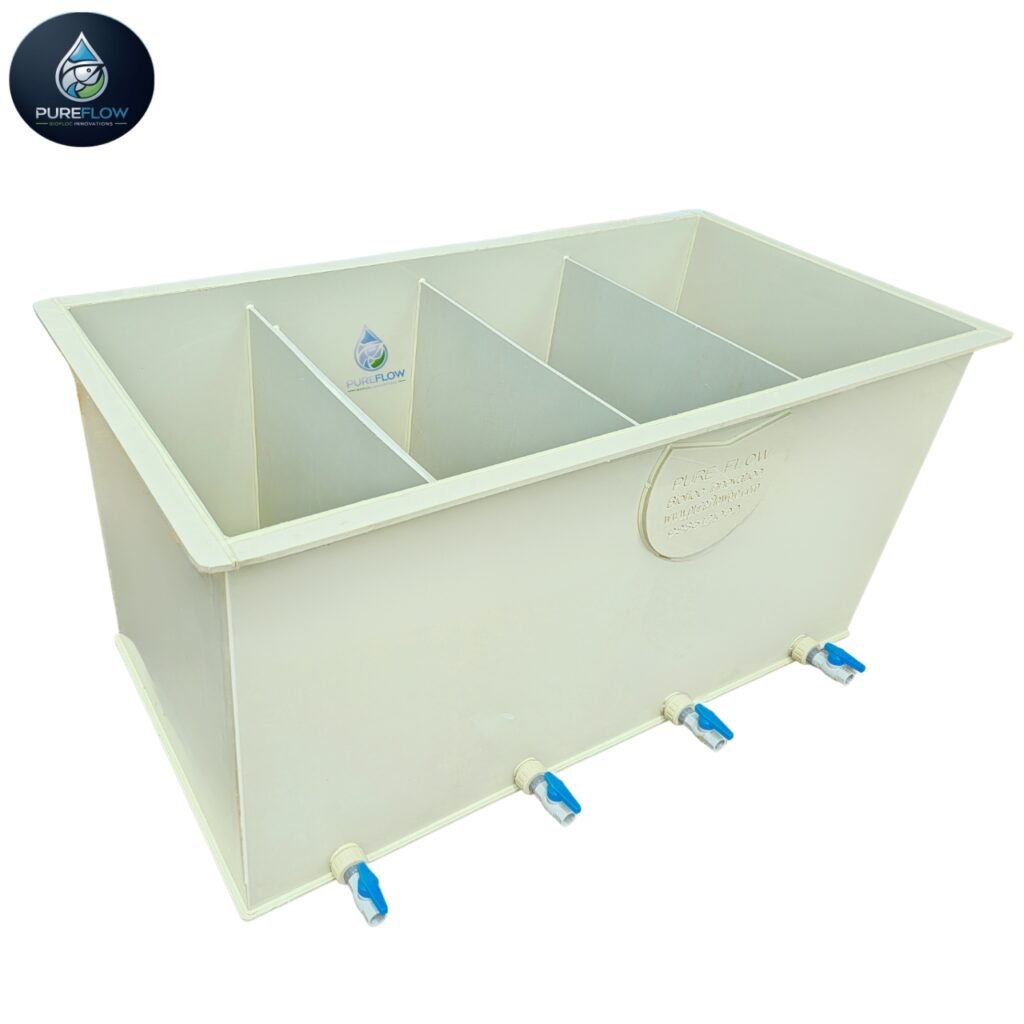
The Engine of Water Quality in Aquaculture and Wastewater
A Bio Media Filter is a type of biological filter used in **aquaculture** and **wastewater treatment** to remove dissolved waste products, primarily **ammonia** and **nitrite**, from water. It provides a large surface area for the growth of beneficial **nitrifying bacteria**, which convert these harmful compounds into less toxic **nitrate** through a process called **nitrification**.
Understanding the Bio Media Filter
A Bio Media Filter operates on the principle of **biological filtration**, an essential component of water quality management in closed or recirculating systems. The core function is to facilitate the **nitrogen cycle** within the filter vessel.
The Role of Bio Media
The effectiveness of the filter hinges on the **Bio Media** itself. This media, often made of plastic or ceramic, is specifically designed to maximize its **Effective Surface Area (ESA)**.
| Media Type | Description | Key Feature |
|---|---|---|
| Fixed Bed Media | Static media held in place (e.g., bio-balls, sponge, ceramic rings). | High structural integrity; easy to manage. |
| Moving Bed Biofilm Reactor (MBBR) Media | Small, buoyant plastic carriers that move freely within the reactor, typically kept in motion by aeration. | **Self-cleaning**; very high ESA per volume; less prone to clogging. |
| Submerged Aerated Filter (SAF) Media | Fixed media housed in a tank where air is pumped in from below. | Stable biofilm; requires routine backwashing. |
The rough, porous, or convoluted surfaces of the media provide an ideal environment for the **biofilm**—a layer of microorganisms, predominantly **nitrifying bacteria to colonize and thrive.
Key Bacterial Processes
1. Ammonia Oxidation:
Ammonia is converted into less toxic Nitrite
2. Nitrite Oxidation:
Nitrite is further converted into relatively harmless Nitrate
Primary Applications
- Recirculating Aquaculture Systems (RAS):Essential for maintaining water quality and high stocking densities.
- Aquariums and Ponds:The backbone of filtration in large domestic and commercial setups.
- Wastewater Treatment:Used to reduce nitrogenous compounds before discharge.
- Greywater Recycling:Pre-treatment to remove organics and nitrogen.
Design and Operating Factors
| Factor | Importance | Optimization |
|---|---|---|
| Effective Surface Area | Correlates to the amount of bacteria and filtration capacity. | Use high-efficiency media (e.g., MBBR K1 media). |
| Dissolved Oxygen | Nitrification is an aerobic process; bacteria require oxygen. | Ensure adequate **aeration** or **oxygen injection**. |
| Water Temperature | Affects the metabolic rate . | Maintain stable, appropriate temperatures. |
| pH and Alkalinity | Nitrification consumes **Alkalinity** and produces acid. | Routinely check and adjust and Alkalinity levels. |
| Hydraulic Retention Time | The time water spends in contact with the media. | Design filter size appropriately for flow rate and waste load. |
Maintenance and Startup
Filter Startup (Cycling)
Before a biological filter is fully functional, it must undergo a **”cycling”** period to allow the nitrifying bacteria to colonize the media. This process can take 4 to 8 weeks and involves gradually introducing a nitrogen source to culture the biofilm. Water parameters must be monitored daily during this phase.
Routine Maintenance
Sludge Removal: Fixed-bed filters may accumulate **sludge** that must be removed via **backwashing** to prevent anaerobic pockets. MBBR filters are generally self-cleaning.
Pre-Filtration: A **mechanical pre-filter** (e.g., screen, drum filter) is highly recommended before the biofilter to remove large suspended solids, protecting the media from excessive clogging.
Avoid Chlorine: Never use **chlorine** or other strong disinfectants in or near the biofilter, as this will **kill the beneficial bacteria**, leading to a sudden, catastrophic filter crash (loss of nitrification).


