The Core of a Healthy Tank
Understanding Biological Filtration for Aquariums
What is Bio-Filtration?
Biological filtration is the most crucial part of maintaining a stable and safe aquarium environment. It’s the natural process where beneficial bacteria colonize surfaces within your filter and tank, breaking down toxic waste products created by fish, uneaten food, and decaying plant matter. Without it, toxins would quickly build up and kill your aquatic life.
Key takeaway: Biological filtration is the foundation of the aquarium ecosystem, managed by living bacteria. The Nitrogen Cycle: The Bacteria’s Job
The entire process is governed by the Nitrogen Cycle. This cycle converts highly dangerous compounds into a relatively safer end-product:
- Step 1: Ammonia
Fish waste, uneaten food, and decaying organic matter break down into highly toxic Ammonia. A specific group of bacteria, primarily Nitrosomonas, convert this.
- Step 2: Nitrite
The result of the first conversion, Nitrite, is still highly toxic to fish, as it prevents their blood from carrying oxygen. Another type of bacteria, Nitrobacter (or often Nitrospira), takes over.
- Step 3: Nitrate
Nitrate is the final product. It is far less toxic than Ammonia or Nitrite, but levels must be controlled through routine partial water changes and live plants. This completes the cycle!
The Home for Bacteria: Filter Media
The core purpose of biological media is to provide maximum surface area for bacteria to colonize. The more porous and textured the material, the better!
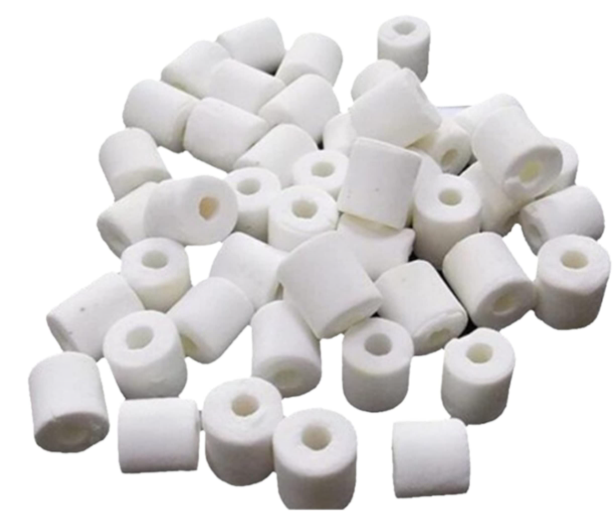
Ceramic Rings & Balls
Highly porous media (often
sintered glass or ceramic) designed to have an immense internal surface area, supporting large colonies of bacteria in a small space. Ideal for external and canister filters.
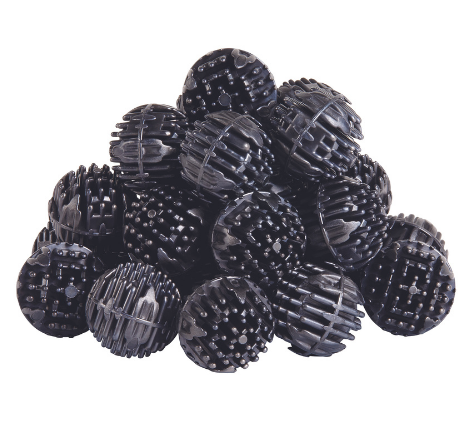
Bio-Balls & Plastic Media
Plastic spheres or shapes that offer high surface area with good water flow. They are non-porous and primarily used in trickle or wet/dry filters, where water is highly oxygenated.
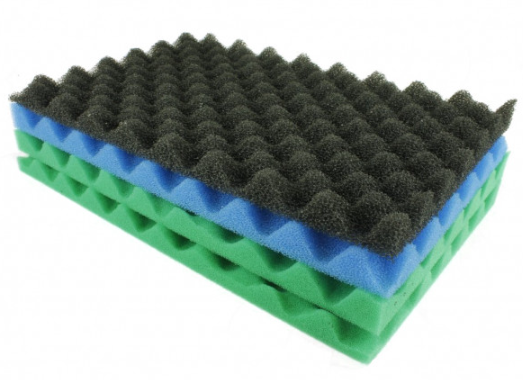
Sponge/Foam Filters
Often overlooked, coarse filter sponges provide both mechanical filtration (trapping debris) and an excellent, easily maintained surface for beneficial bacteria.
Substrate & Decorations
Believe it or not, the vast majority of beneficial bacteria actually live on your aquarium gravel, sand, and decorations, not just inside the filter!